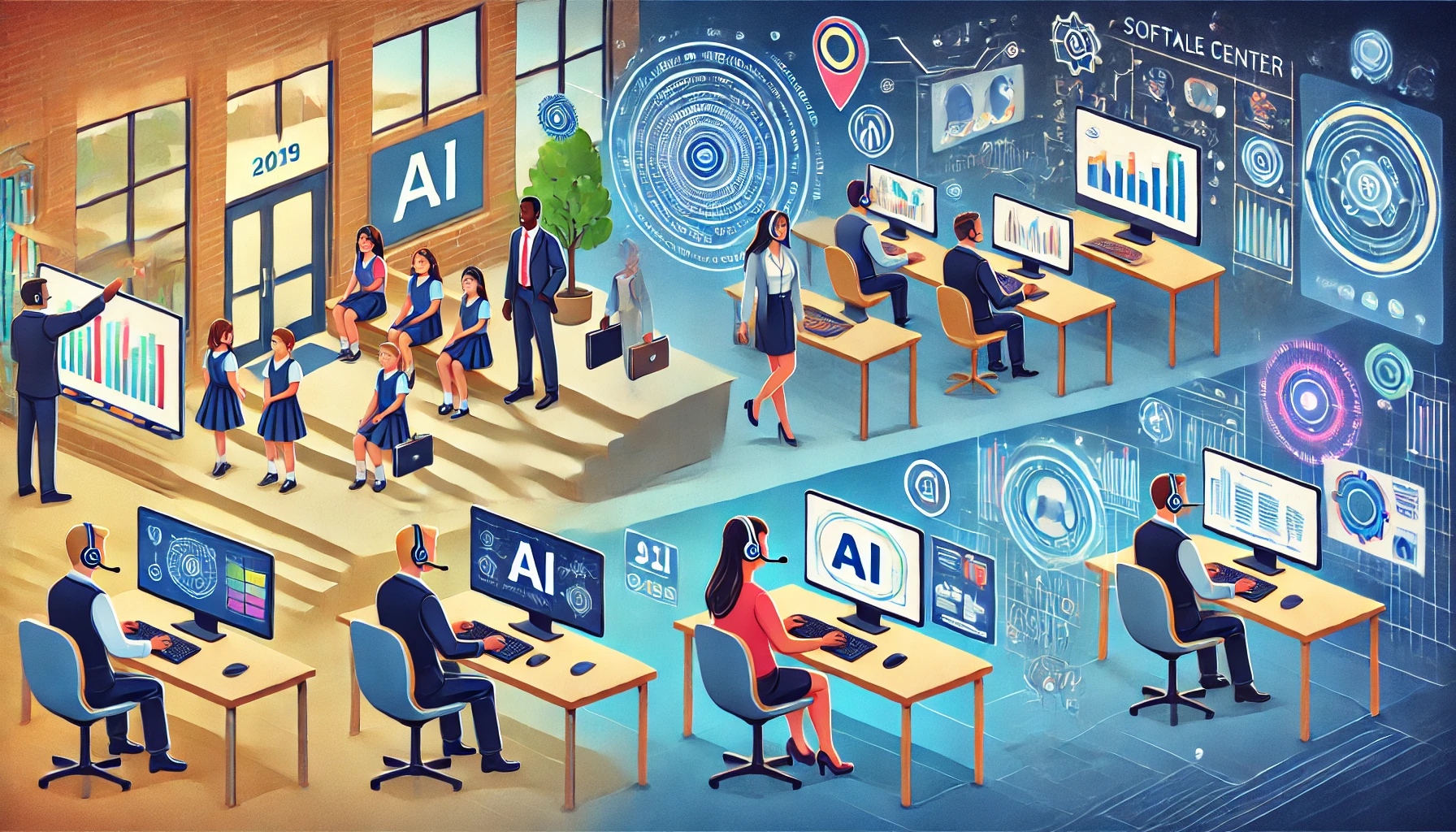
Empowering the Workforce in the Age of AI
Introduction As Artificial Intelligence reshapes industries globally, there is a pressing need to act decisively to mitigate its disruptive impacts, particularly in the outsourcing, software, and customer service sectors. The following recommendations provide a roadmap for governments, educational institutions, training centers, and corporate stakeholders:
1. Early Integration in Education: Building a Future-Ready Workforce
- High School Level: Introduce AI fundamentals, including practical applications and ethical considerations, to students. Familiarizing them with AI early ensures they perceive it as a tool to enhance their capabilities rather than a replacement.
- Higher Education: Institutions must embed AI-centric courses in software engineering, data analysis, and customer service curricula. Training students to leverage AI tools, automate repetitive tasks, and innovate using AI will dramatically improve their employability.
2. Software Training Institutes and Vocational Colleges: Making AI a Core Component
- Encourage training centers to include hands-on modules on AI-driven platforms, emphasizing their use in software development, debugging, and project management.
- Train educators and trainers to teach AI-enhanced workflows effectively, ensuring consistent and high-quality skill dissemination.
3. Retraining the Existing Workforce: Reskill to Stay Relevant
-
Develop retraining programs tailored to the needs of professionals in software and IT services. Focus areas should include:
- AI-Augmented Development: Training experienced programmers to use AI for rapid prototyping, debugging, and optimization.
- Project Management Transformation: Teaching technical leads how to collaborate with AI to design, deploy, and maintain software projects.
-
For call center employees, the focus should shift from routine query handling to managing escalations and leveraging customer data for personalized service. Soft skills training, combined with AI system navigation and oversight, can create a specialized workforce adept at adding value where AI systems leave gaps.
4. Repurposing the Call Center Workforce
- Recognizing the diminishing need for routine customer service roles, companies and training institutions should prepare employees for:
- Customer Experience Management: Enhancing the AI-driven customer journey with human empathy and insight.
- Data Annotation and Curation: Leveraging AI systems to improve their efficiency through precise data inputs and maintenance.
- Technical Support Roles: Training employees to handle AI-related troubleshooting and escalations.
- AI Monitoring and Feedback: Employing staff to audit AI systems, ensuring compliance with regulatory and customer satisfaction benchmarks.
5. Government and Industry Collaboration
- Policy Advocacy: Governments must incentivize reskilling programs and invest in public-private partnerships to create employment opportunities in emerging AI-driven sectors.
- Funding AI Labs: Establish innovation centers in collaboration with colleges and software training institutes to experiment with and deploy AI technologies.
6. Case Studies and Success Stories
- Showcase real-world examples of individuals and companies successfully transitioning to AI-integrated roles. For instance, call centers repurposing teams to manage AI escalations or companies using AI to reduce manual hiring times while achieving higher accuracy.
By taking these steps, we can transform the narrative of AI adoption from one of job displacement to job evolution, creating a workforce that thrives in a rapidly advancing technological world. Let us ensure AI becomes an enabler of opportunity rather than a harbinger of redundancy. Act now, train for tomorrow, and lead the change.
Latest Posts
Empowering the Workforce in the Age of AI
March 9, 2024
Content Creation and Market Analysis with AI
March 8, 2022